
How a 60-Year-Old Prostate Cancer Patient in India Used a U.S. Second Opinion to Strengthen His Treatment Plan

Introduction
When a series of scans came back in late March, Rajan (alias)— a 60-year-old man from New Delhi, India — already sensed the news would be serious. What he did not expect was how quickly his ordinary life would reorganize itself around appointments, pathology reports, and decisions that felt far too large to make alone.
Rajan had spent years keeping his health in careful order. A vegetarian who managed type 2 diabetes and stayed active despite an old knee injury, he was the kind of person who read instructions twice and asked questions. So when his doctors explained that he had an advanced cancer that had already spread well beyond where it began, the diagnosis landed with a weight no amount of preparation could soften.
For Rajan and his family, the hardest part was not only the diagnosis. It was a quieter, persistent question underneath it: was the plan in front of them truly the right one — and was anything being missed?
The Diagnosis and the First Treatment Plan
Rajan’s evaluation took place at a major cancer center in New Delhi, where a medical oncologist — referred to here as Dr. Verma (alias) — led his care. Over about two weeks, the team built a detailed picture of his disease.
A PSMA PET-CT scan — an imaging test that lights up prostate-cancer cells wherever they are in the body — showed the cancer had spread extensively to lymph nodes and to bone, from the base of the skull to the thigh bones. Whole-spine and pelvic MRI scans confirmed multiple areas of bone involvement. A prostate biopsy then identified the cancer’s type and aggressiveness, including features that pathologists associate with higher-risk disease.
In plain terms, Rajan was diagnosed with metastatic castration-sensitive prostate cancer — meaning the cancer had spread to other parts of the body (Stage IV) but was still expected to respond to therapy that lowers testosterone, the hormone that fuels it.
Dr. Verma recommended an intensive approach often called triplet therapy: hormone-blocking treatment, the oral medication abiraterone, and chemotherapy (docetaxel), planned for six cycles. It was a standard, guideline-aligned plan for high-burden disease — and also a great deal to absorb at once.
“They told me the plan, and I trusted my doctor. But three strong treatments at the same time — I wanted to understand whether that was exactly right for me.” — Rajan says.
Why He Sought a Second Opinion
Rajan’s hesitation was not doubt about his doctor. It was the sheer magnitude of the decision. The treatment was demanding, the disease was advanced, and he wanted the reassurance that comes from having more than one expert look closely at the same evidence.
Several specific concerns pushed him forward. He wanted to know whether the intensity and dosing of his treatment were appropriate. He wondered whether newer targeted or genetic-based therapies he had read about should be part of his plan now, or later. And he wanted a perspective from a center that sees a high volume of advanced prostate cancer.
Like many patients, he also worried that asking for another opinion might seem like a lack of faith in his treating team. His family — particularly his son, here called Aakash (alias) — helped him reframe it: seeking expert input was not disloyalty, it was diligence. That search led the family to a service that arranges independent reviews with U.S. specialists, and they decided to begin.
If you have received a complex diagnosis and want a specialist review from a US physician, our team can explain the process and help you understand your options — at no cost. |
The Second-Opinion Process
For families facing a diagnosis like Rajan’s, the process of getting a second opinion can feel as daunting as the diagnosis itself. In practice, it was more straightforward than he expected.
The team gathered Rajan’s records into a single package for specialist review: his PSMA PET-CT and MRI images, the prostate biopsy and pathology report, genetic testing results, his treatment summary, and recent blood work. These were shared securely with a U.S. genitourinary medical oncologist — a cancer specialist focused specifically on cancers of the prostate and urinary tract — referred to here as Dr. Anand Mehta (alias).
Dr. Mehta is a board-certified genitourinary medical oncologist currently appointed at The University of Texas MD Anderson Cancer Center in Houston, Texas — a National Cancer Institute–designated center that U.S. News & World Report has repeatedly ranked No. 1 for cancer care — with roughly two decades of experience and a research focus on advanced prostate cancer and immune-based therapies. Before the consultation, he reviewed Rajan’s complete history, then walked the family through his assessment in a video discussion — the same way he would evaluate a patient in his own clinic.
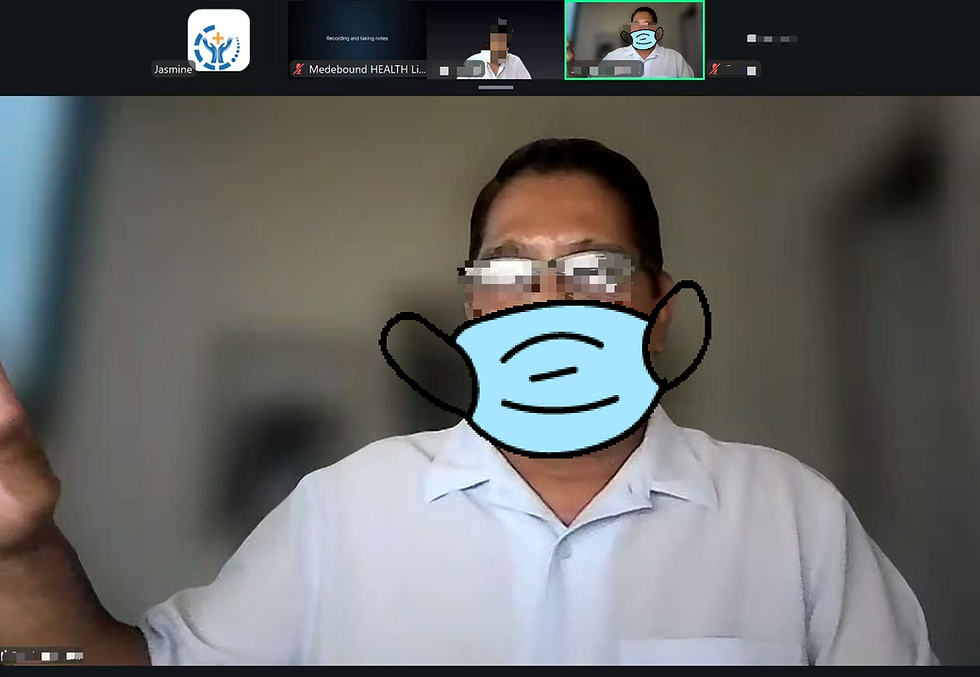
For Rajan, the experience was calmer than he had feared — organized, thorough, and centered on his specific case rather than generic advice.
The Clinical Insights: What the Specialist Found
This is where a second opinion earns its value — not by overturning everything, but by examining each decision in detail. In Rajan’s case, Dr. Mehta’s review did both: it confirmed that the overall strategy was sound, and it surfaced one important refinement.
First, the reassurance. Dr. Mehta agreed that triplet therapy was the right approach and consistent with the standard strategy used at MD Anderson for high-burden disease. He also noted a striking early response: Rajan’s PSA — a blood marker that tracks prostate-cancer activity — had fallen by 98.47% from its starting level, a strong signal that the treatment was working.
Individual results will vary. The outcome described reflects this patient’s specific clinical circumstances. Speak with your own physician to understand what results may be realistic for your situation.
Then, the refinement. Reviewing the chemotherapy records, Dr. Mehta identified that Rajan’s docetaxel was being given at about 75% of the standard dose — a reduction made because of his high tumor burden. In the specialist’s view, high tumor burden alone is not a reason to reduce chemotherapy. For a relatively young, fit 60-year-old, he recommended prioritizing the full dose unless there was a specific medical reason — such as nerve-related side effects — to lower it. In plain terms: Rajan might be receiving less chemotherapy than his body could safely handle, which could matter for how well the treatment works.
Dr. Mehta also offered a forward-looking strategy. He advised against adding newer therapies — including certain targeted drugs, PSMA-based radioligand therapy, and clinical trials — at this stage, not because they lack value, but because using them too early could close off options later. The priority, he explained, was sequencing treatments wisely over the long run.
“The strategy here is good. My job is to make sure we’re getting full benefit from it now — and protecting the choices we’ll need later.” — Dr. Mehta, in his review.
Original plan vs. specialist’s review
Aspect | Local treatment plan | Specialist review & refinement |
Overall strategy | Triplet therapy (hormone therapy + abiraterone + chemotherapy) | Endorsed as appropriate and guideline-aligned |
Chemotherapy dose | Reduced to ~75% because of high tumor burden | Recommend full dose for a fit patient unless a specific medical reason exists; confirm the reason |
Newer targeted drugs | Not yet started | Hold for now to preserve future options |
PSMA radioligand therapy | Not yet started | Reserve for later to avoid early bone-marrow impact |
Clinical trials | Not enrolled | Defer until clearly needed, to protect future eligibility |
Supportive focus | Standard supportive care | Add emphasis on muscle maintenance, diet, and blood-sugar control |
The Patient’s Decision
Armed with the review, Rajan did not change course dramatically — and that, in itself, was reassuring. The second opinion had confirmed that his foundation was solid; what it gave him was a sharper, more confident plan.
With his family and his treating team, Rajan chose to continue triplet therapy and complete all six chemotherapy cycles as planned. He decided to raise the dose question directly with Dr. Verma — to understand the reason for the reduction and, if there was no specific medical barrier, to discuss moving toward the full dose. He also agreed to hold off on newer drugs and trials for now, and to make muscle maintenance, a careful vegetarian diet, and blood-sugar control part of his daily routine.
Treatment and Outcome
It is important to be clear-eyed about what a second opinion can and cannot do. Rajan’s cancer is advanced and, as his specialists have explained, not currently curable. His story is not one of a cure — it is one of a stronger, clearer plan and an encouraging early response.
At the time of this review, Rajan had completed two of his six planned chemotherapy cycles and was tolerating treatment well, with no hospitalizations, no dose delays, and only manageable side effects. His performance status remained strong, allowing him to stay active and independent. His PSA had dropped from a baseline of 2,490 to 38.2 ng/mL — a 98.47% reduction in about four weeks — and blood tests confirmed that his testosterone had reached the intended low level.
Just as meaningful as the numbers was the change in how the family felt. They had a roadmap for the months ahead, a plan to revisit the chemotherapy dose, and a clear sequence for if and when the disease changes. The treatment is ongoing, and the path forward will be guided by regular monitoring — but Rajan moves through it with a sense of direction he did not have before.
Rajan’s journey at a glance
When | Milestone |
Late March 2026 | Imaging and scans reveal advanced, metastatic disease |
Early April 2026 | Biopsy confirms the diagnosis; triplet therapy begins |
April 2026 | First two chemotherapy cycles completed; strong early PSA response |
May 2026 | U.S. specialist second opinion: plan confirmed, dose question raised, long-term strategy set |
Ongoing | Remaining chemotherapy cycles; regular monitoring and reassessment |
How Medebound HEALTH Connects International Patients to Top U.S. Cancer Experts
Medebound HEALTH is a U.S.-based medical coordination service that facilitates second opinions from independent U.S.-licensed physicians affiliated with leading cancer centers such as MD Anderson, Mayo Clinic, Memorial Sloan Kettering and Johns Hopkins. Since 2016, the service has supported 3000+ international patients, primarily from Asia, seeking expert input before major oncology decisions.

Rated 4.6 ⭐⭐⭐⭐⭐ at Trustpilot
Medebound HEALTH's online testimonials. Learn More
Is a Second Opinion Right for Your Situation?
If you or someone in your family has received a diagnosis that feels uncertain, a treatment plan that raises questions, or a disease that has returned or changed—you do not have to navigate that alone.
A 20-minute, no-obligation case review with a Medebound HEALTH Advisor will help you understand whether a specialist review is appropriate for your situation, which type of specialist would be most relevant, and what the process involves, step by step. There is no pressure and no commitment. The conversation begins with your questions.

Disclaimer
We strive to maintain the accuracy and provide regular updates for the treatment information described in this article. However, treatment outcomes may vary between individuals. The information provided here is not intended as a diagnostic or treatment recommendation and should not replace the careful evaluation and advice of your attending physician. The service is independently operated by Medebound HEALTH and is not provided, partnered, or affiliated with any hospital center as an institution.


