How a UK Patient Got a US Remote Second Opinion on Her Adenoid Cystic Carcinoma — Without Travelling

Updated: Jun 9
Table of Content:
|
Introduction
Chandra (name changed to protect privacy), a 52-year-old professional based in London, had spent weeks being passed between specialists after an unexplained ulcer appeared at the back of her mouth. The process had involved multiple biopsies, two competing pathology reports, and a diagnosis that changed not once but twice. When a rare, slow-growing cancer of the minor salivary gland was finally confirmed, her medical team recommended radiotherapy to follow the surgery she had just endured. Chandra said no.
What happened next — her decision to seek an expert second opinion from one of the world's most respected head and neck oncology specialists — is the kind of story that illustrates something important about how patients can take ownership of difficult medical decisions, without abandoning the doctors who are already caring for them.
"I felt I needed someone to sit down with me and explain everything — not just what the treatment was, but why. I needed to understand what I was agreeing to." — Chandra
Chandra's journey — from first symptom to confirmed diagnosis to the pivotal second opinion — lasted five months.
The Diagnosis & First Treatment Plan
In April 2025, Chandra noticed a persistent discomfort in the back of her throat, aggravated by spicy food and lingering weeks after what seemed to be a respiratory infection she picked up while visiting India. A dental check in early April had found nothing unusual. By June, however, she had developed pain in her left ear and her GP identified a visible ulcer on the left side of her soft palate — the soft tissue at the back of the roof of the mouth.
A contrast-enhanced MRI of the neck, completed on June 13 at a hospital in London, revealed a well-defined lesion measuring 1.7 × 1.4 × 1.6 cm on the left soft palate. The imaging pattern was described as inconsistent with the most common oral cancer type (squamous cell carcinoma) and instead suggested a minor salivary gland tumour. A biopsy was performed.
A Diagnosis That Changed Twice
The first pathology report, issued in mid-June, leaned towards a benign diagnosis: pleomorphic adenoma — a common, non-cancerous salivary gland growth. The finding appeared consistent with this in its cellular structure and lack of aggressive features.
However, on July 1, the hospital's Multidisciplinary Team (MDT) — a group of specialists reviewing the case together — raised concern about some atypical features. A specialist genetic test was requested: a FISH (Fluorescence In Situ Hybridisation) test targeting the MYB gene, which is a hallmark rearrangement associated with a specific cancer type.
On July 15, the result came back positive. Seventy-eight percent of the tumour cell nuclei showed MYB gene rearrangement — a finding that, in plain terms, confirmed the lesion was not benign but was instead adenoid cystic carcinoma (ACC) — a low-grade malignant tumour arising from the minor salivary glands. The revised staging was pT2 N0: a tumour larger than 2 cm but confined to the area of origin, with no spread to the lymph nodes.
"When they came back and said the second test had changed everything — I couldn't process it. I went home and just sat with it." — Chandra
Surgery and the Radiotherapy Recommendation
On July 28, 2025, Chandra underwent extensive surgery at Cleveland Clinic London. The procedure involved removal of the tumor and adjacent tissue, including the left tonsil; selective dissection of lymph node levels I through III on the left side of the neck; and a radial forearm free flap reconstruction — a technique in which a section of skin and tissue from the forearm is transferred to rebuild the area where the tumor was removed, with microvascular (microscopic blood vessel) reconnection in the neck.
The postoperative pathology report, confirmed on August 7, delivered findings that were broadly encouraging: the tumour was confirmed as low-grade ACC measuring 22 mm, all surgical margins were clear (the closest margin was over 5 mm at its deepest point), and all 26 lymph nodes examined showed no evidence of cancer spread. One concerning feature was noted: focal perineural invasion — meaning there were isolated instances where the tumour had been in close contact with or grown into small nerve fibres, which is a known characteristic of ACC and a recognised risk factor for local recurrence.
In September, the MDT recommended postoperative radiotherapy to reduce recurrence risk. Chandra, still recovering physically and in a state of significant emotional distress since the diagnosis, was inclined to decline.
Why She Sought A Second Opinion
Chandra's reluctance to proceed with radiotherapy was not a lack of confidence in her London surgical team — she credits them with a technically excellent operation and careful follow-up care. Her hesitation was rooted in something more personal: fear of what the treatment would do to her quality of life.
The doctors had, as required, informed her of potential long-term side effects of radiotherapy to the head and neck region: risk of dry mouth, damage to teeth and bone, difficulty swallowing, and the rare but serious possibility of nerve damage or bone necrosis. Chandra, who had already faced weeks of anxiety and had required considerable family support to get through the surgery, felt unable to consent to something she didn't fully understand.
"Everyone around me was saying just do it, it's recommended. But I needed to understand it for myself — the actual numbers, the actual risk of each side effect. I couldn't find a way to get those answers." — Chandra
A family member researching on her behalf came across Medebound HEALTH, a cross-border medical consulting service that connects patients with specialist physicians at leading international cancer centers. The appeal was specific: access to a head and neck oncology expert who had seen hundreds of adenoid cystic carcinoma cases — a rare tumor type accounting for fewer than 1% of all head and neck cancers — and who could review her case in detail.
The goal was not to overturn her surgical team's recommendation, but to understand it well enough to make a decision she could live with.
The Second Opinion Process
What It Actually Involved
Through Medebound HEALTH, Chandra's complete medical record was compiled and translated into a format suitable for expert review. The documentation package submitted included: the full operative report from Cleveland Clinic London; all pre- and post-operative pathology reports including the MYB FISH test results; the original biopsy pathology and supplementary immunohistochemistry (IHC) results; imaging from the June 13 MRI and June 18 CT thorax; the September physiotherapy and speech and language therapy follow-up reports; and the complete blood work trend from the perioperative period.
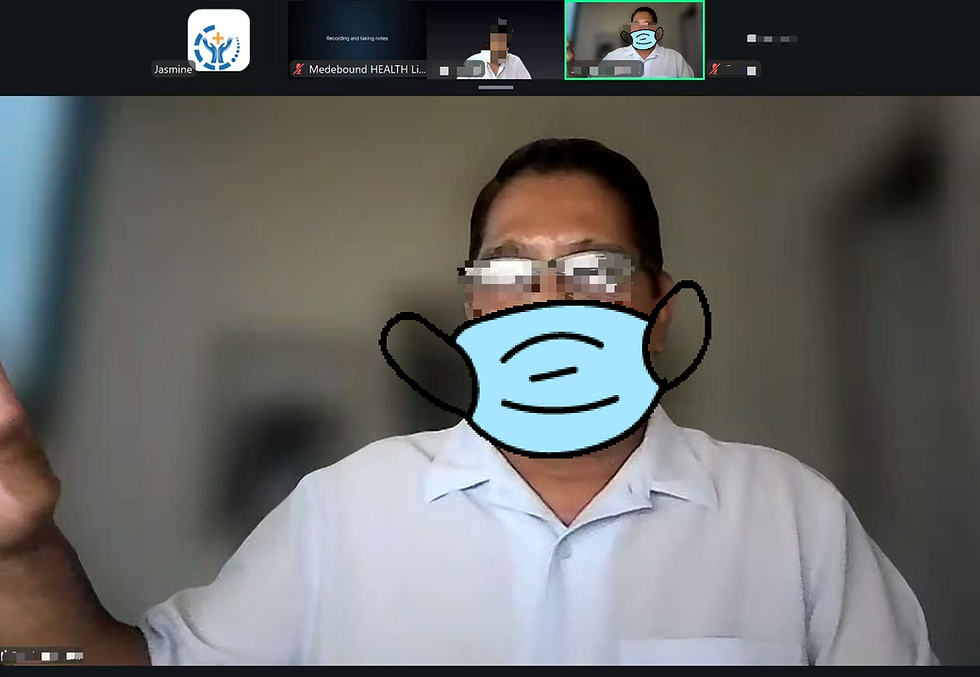
Within the agreed turnaround period, a video consultation was arranged with Dr. Jared (alias), a board-certified head and neck oncologist with current appointment at Memorial Sloan Kettering Cancer Center (MSKCC) in New York — one of the world's foremost cancer centres — with over 40 years of dedicated experience in exactly this type of tumour. Dr. Jared reviewed all submitted records in advance of the video session and prepared a detailed written summary of findings and recommendations.
Priya described the consultation as the first time she genuinely understood her own situation.
"DR. Jared explained everything so clearly. Not just what to do, but why each option existed and what the numbers actually meant for someone in my position. I walked away with real information." — Chandra
If you've received a diagnosis and would like a top U.S. specialist to review your case, our team can walk you through the process at no cost.
The Clinical Insights - What Dr. Jared Found
Validating the Surgical Outcome
Dr. Jared's first and most important message to Chandra was one of reassurance about the surgery itself. The operation had been carried out to an excellent standard. The tumor characteristics — small size (22 mm), low-grade classification, well-defined boundary, complete surgical excision with clear margins, and no evidence of regional lymph node spread — placed her in a genuinely favourable prognostic group. Dr. Jared was explicit: the core oncological risk going forward was local recurrence along neural pathways, not distant metastasis to organs such as the lungs or liver.
The presence of focal perineural invasion — in plain terms, evidence that the cancer had made isolated contact with small nerve fibres — was acknowledged as a risk factor, but was placed in appropriate clinical context. This is a common feature of adenoid cystic carcinoma and, at low grade, does not carry the same weight as high-grade perineural invasion.

The Radiotherapy Question — Addressed in Detail
Dr. Jared's position on radiotherapy was clear: adjuvant radiotherapy — treatment administered after surgery to eliminate any microscopic residual cells — remains the standard of care in this clinical scenario and is the only available tool for reducing recurrence risk. There are no chemotherapy agents or systemic therapies with established efficacy in early-stage ACC.
Critically, Dr. Jared quantified the risk difference in terms Chandra could evaluate. Without radiotherapy, the estimated local recurrence risk sits at approximately 10–15%, with recurrence typically occurring not at the original tumour site but along the nerve pathways — in plain terms, the risk that any remaining microscopic cancer cells could travel along nerves toward the base of the skull. With radiotherapy, that risk is estimated to reduce to approximately 5–7%.
Dr. Jared also addressed the timing issue Chandra's local team had mentioned: radiotherapy is most effective when administered to microscopic residual cells shortly after surgery. If recurrence occurs and is then detectable on imaging, the burden of disease is far greater and the effectiveness of radiotherapy at that stage is substantially reduced. In plain terms: acting now, when the target is invisible and therefore small, is meaningfully more effective than waiting.
On the Side Effects Chandra Feared
This was the section of the consultation that Chandra described as transformative. Dr. Jared explained that the side effect profile she had been informed of — dry mouth, bone damage, nerve damage — is substantially dependent on which radiotherapy technology is used and precisely how the radiation field is planned.
For Chandra's specific anatomy, the recommended approach would not involve irradiating the neck, the full oral cavity, the pharynx, or the face. The field would be limited to: the ipsilateral (same-side) neural pathways relevant to where the tumour arose, including specific branches of the trigeminal nerve running from the soft palate toward the skull base; and the tumour bed itself. The reconstructed flap — the tissue transferred from her forearm — would not be irradiated.
The preferred technology is Intensity-Modulated Proton Therapy (IMPT) — in plain terms, a form of precision radiotherapy that uses proton beams rather than conventional X-rays to deliver radiation. IMPT deposits its energy at a precisely defined depth and stops — unlike conventional radiotherapy beams, which continue beyond the target. This physical property substantially reduces the dose delivered to surrounding healthy structures such as the right salivary gland, teeth, jawbone, and throat muscles.
The practical implication: the specific side effects Chandra had been warned about — severe dry mouth, osteonecrosis (bone death), major swallowing difficulty, and nerve damage — carry a substantially lower probability with IMPT than with older radiotherapy techniques. Dr. Jared noted that the severe side effects listed in standard consent documentation are legally required disclosures; their actual incidence with modern proton therapy is very low.
Original Recommendation vs. Second Opinion — At a Glance
Clinical Factor | Original MDT Recommendation | US Second Opinion |
Post-op radiotherapy | Recommended — patient inclined to decline | Strongly recommended: IMPT within 6–8 weeks of surgery |
Radiation technology | Not specified by local MDT | Priority: IMPT (proton); alternative: IMRT |
Recurrence risk (no RT) | Not quantified | 10–15%, chiefly along neural pathways |
Recurrence risk (with RT) | Not quantified | Reduced to 5–7% with IMPT |
Irradiation field | Not detailed | Ipsilateral neural pathways + tumour bed only; neck/face spared |
Monitoring approach | Baseline MRI at 3 months; follow-up plan TBD | MRI-based (not CT); structured lifelong surveillance schedule |
Prognosis framing | Limited detail provided | Good overall; key risk is local recurrence, not distant metastasis |
Individual results will vary. The outcome described reflects this patient's specific clinical circumstances. Speak with your own physician to understand what results may be realistic for your situation.
The Patient's Decision
Chandra did not make her decision during the consultation itself. She returned to Dr. Jared's written summary report with her family over several days, re-reading the sections on risk quantification and the specific side effect profile of IMPT. She also shared the report with her surgical team in London, who were receptive to the additional detail and supported her in identifying appropriate radiotherapy centers with proton beam capability.
Her eventual decision was to proceed with postoperative radiotherapy — but using IMPT, at a centre equipped for precision proton delivery, with the radiation field planned as described in the second opinion. She had not changed her mind in isolation: she had gathered enough information to make the decision herself.
Treatment and Outcome
Recovery from Surgery
By September 2025 — approximately six weeks post-surgery — Chandra's recovery was proceeding well by all clinical measures. The reconstructed flap was in good position. She had returned to eating a regular diet and tolerating thin fluids with only occasional minor nasal regurgitation related to the volume of food taken at once, with no signs of aspiration (liquid entering the airway). Mild hypernasality — a slight nasal quality to her voice — was under active treatment through outpatient speech and language therapy, targeting jaw range of motion and velum (soft palate) function, with good technique demonstrated.
Her physiotherapy assessment noted expected postoperative findings: some stiffness in the cervical (neck) facet joints and mild shoulder muscle weakness related to the neck dissection procedure. A structured programme was in place for neck mobility and scar management.
Treatment Plan Following the Second Opinion
With the clarity provided by Dr. Jared review, Chandra's treatment plan at the time of publication includes: Intensity-Modulated Proton Therapy (IMPT) at a centre with appropriate proton beam capability, targeting the ipsilateral neural pathways and tumour bed. Her team in London identified qualified centres for onward referral, including institutions with established proton programmes. Treatment timing aligns with Dr. Jared's recommendation of initiating within 6–8 weeks post-surgery, following wound healing and treatment planning.
A baseline MRI is scheduled three months post-surgery to establish a comparative reference for all future surveillance imaging. Lifelong follow-up is planned: imaging every three months initially, then six-monthly, then annually for the first five years, and every two to three years thereafter.
Treatment & Recovery Timeline
Date | Event |
April 2025 | First symptoms — persistent throat discomfort following a trip to India |
June 6, 2025 | New ear pain on the left side; left soft palate ulcer confirmed on examination |
June 13, 2025 | Neck MRI reveals 1.7 cm lesion on left soft palate; biopsy recommended |
June 16–18 | Biopsy performed; preliminary pathology favours pleomorphic adenoma (benign growth) |
June 24, 2025 | Supplementary immunohistochemistry — still favouring benign diagnosis |
July 1, 2025 | MDT case discussion raises possibility of malignancy; MYB FISH test requested |
July 15, 2025 | MYB gene rearrangement confirmed (78% of cells positive) — diagnosis revised to adenoid cystic carcinoma |
July 28, 2025 | Complex surgery at Cleveland Clinic London: tumour excision, neck dissection, flap reconstruction |
August 7, 2025 | Final pathology: low-grade ACC, pT2 N0; 26 lymph nodes clear; focal perineural invasion noted |
September 2025 | Follow-up: good recovery; MDT recommends radiotherapy; patient inclined to decline |
September 22, 2025 | Second opinion obtained via Medebound Health — specialist review by head and neck oncology expert at Memorial Sloan Kettering Cancer Center |
How Medebound HEALTH Connects International Patients to Top U.S. Cancer Experts
Medebound HEALTH is a U.S.-based medical coordination service that facilitates second opinions from independent U.S.-licensed physicians affiliated with leading cancer centers such as MD Anderson, Mayo Clinic, Memorial Sloan Kettering and Johns Hopkins. Since 2016, the service has supported 3000+ international patients, primarily from Asia, seeking expert input before major oncology decisions.

Rated 4.6 ⭐⭐⭐⭐⭐ at Trustpilot
Medebound HEALTH's online testimonials. Learn More
Key Takeaways and Patient Empowerment
Chandra's case illustrates several dimensions of what a well-structured medical second opinion can offer — not a replacement for the clinical team already involved in someone's care, but a layer of additional expert input that can change the quality of a patient's decision-making.
KEY TAKEAWAYS ▶ A rare tumour type warrants rare expertise. Adenoid cystic carcinoma accounts for fewer than 1% of head and neck cancers. Access to a specialist who has reviewed hundreds of ACC cases — rather than tens — can provide meaningfully more nuanced guidance. ▶ Understanding the 'why' behind a recommendation is as important as the recommendation itself. Chandra's original reluctance to proceed with radiotherapy stemmed not from rejection of treatment but from insufficient information about what the treatment would actually involve for her specific anatomy. ▶ Quantified risk changes the conversation. The difference between 'radiotherapy reduces recurrence risk' and 'without radiotherapy the risk is 10–15%; with IMPT it falls to 5–7%' is the difference between an abstract recommendation and a concrete personal decision. ▶ Technology choice matters within a treatment category. Radiotherapy is not a single intervention — the side effect profile of IMPT differs substantially from conventional IMRT or older techniques. A second opinion from a specialist at a centre routinely using multiple modalities may provide options that local teams have not presented. ▶ Seeking a second opinion is not an act of distrust. Chandra's surgical outcome in London was excellent. The second opinion did not contradict the quality of her primary care — it built on it. |
Is a Second Opinion Right for Your Situation?
If you or someone in your family has received a diagnosis that feels uncertain, a treatment plan that raises questions, or a disease that has returned or changed—you do not have to navigate that alone.
A 20-minute, no-obligation case review with a Medebound HEALTH Advisor will help you understand whether a specialist review is appropriate for your situation, which type of specialist would be most relevant, and what the process involves, step by step. There is no pressure and no commitment. The conversation begins with your questions.
Disclaimer
We strive to maintain the accuracy and provide regular updates for the treatment information described in this article. However, treatment outcomes may vary between individuals. The information provided here is not intended as a diagnostic or treatment recommendation and should not replace the careful evaluation and advice of your attending physician. The service is independently operated by Medebound HEALTH and is not provided, partnered, or affiliated with any hospital center as an institution.