Remote Second Opinion with Glioma Expert Affiliated with Dana-Farber : a Case Study

Updated: Mar 10
Author: Medical Editor Iris
Article Type: Brain Tumor Case Study
Introduction
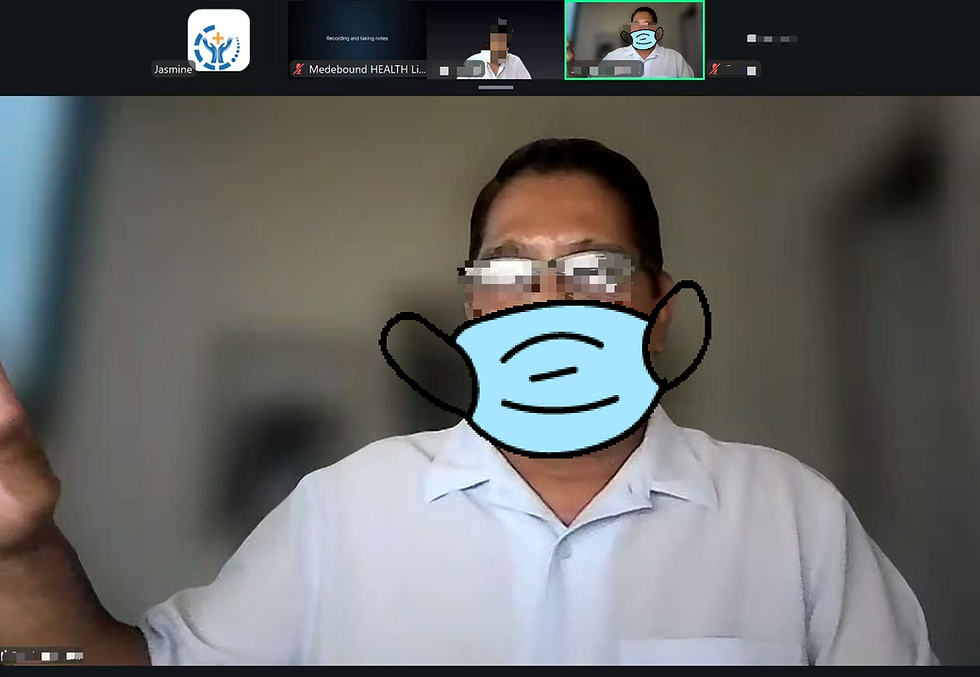
This case highlights the journey of a patient with astrocytic glioma (WHO Grade 3) and her family’s search for cutting-edge treatment options beyond standard care in China. Through Medebound HEALTH Medical’s international telemedicine platform, the family successfully connected with Professor Hale (alias), Director of Neuro-Oncology at the Dana-Farber Cancer Institute, Harvard Medical School.
Professor Hale not only recommended additional genetic and molecular testing to clarify the diagnosis but also introduced multiple post-recurrence treatment strategies, including advanced targeted therapies, immunotherapy, virotherapy, and clinical trial opportunities. This consultation brought new hope and direction for the patient’s future treatment.

The annual incidence of glioma in Asia is estimated at 3–6.5 per 100,000 people, with tens of thousands of new cases reported each year and a significant mortality burden. Malignant gliomas occur at a rate of approximately 5.8 per 100,000, and their five-year mortality rate is among the highest of all systemic cancers—second only to pancreatic and lung cancer.
Within primary malignant central nervous system (CNS) tumors, glioblastoma (GBM, WHO grade IV) is the most common subtype, accounting for nearly 45–47% of cases (around 3.2 per 100,000 people). This is followed by diffuse astrocytoma, with an incidence of approximately 0.5 per 100,000 people across the region.
Table of Contents:
Patient Background
Patient: Ms. Zhou (pseudonym), daughter of Mr. Zhou
Domestic hospital: Beijing Tiantan Hospital – China’s top neurosurgical and neuro-oncology institution
Domestic diagnosis: Astrocytic glioma, WHO grade 3
Current treatment: Surgery completed, followed by concurrent temozolomide (TMZ) chemotherapy and radiotherapy. The patient is approaching her ninth course of chemotherapy.
The treatment response so far has been stable. However, because gliomas are notorious for high recurrence rates and limited curative therapies, the patient’s family urgently sought new, advanced treatment options abroad.
Medical Context
Gliomas are among the most aggressive central nervous system tumors. In China, the annual incidence is estimated at 3–6.4 per 100,000, with 30,000 deaths annually.
Glioblastoma (WHO Grade IV) is the most common malignant glioma subtype, accounting for 46.6% of primary malignant CNS tumors (~3.2/100,000).
Diffuse astrocytoma and other lower-grade gliomas occur less frequently but often progress to more aggressive forms.
The five-year survival rate for malignant glioma is among the lowest of all cancers, second only to pancreatic and lung cancer. These statistics illustrate the pressing need for innovative therapies.
Role of Medebound HEALTH Medical
Mr. Zhou discovered Medebound HEALTH Medical through a friend. The company quickly assembled a dedicated medical management team to assist his family. Their services included:
Medical record organization and translation (Chinese → English).
Preparation of targeted questions for the international expert.
Matching with leading U.S. experts in neuro-oncology.
Research on emerging therapies and clinical trials, including targeted therapy, immunotherapy, oncolytic virotherapy, and tumor vaccines.
They also engaged Dr. Han from Beijing Tiantan Hospital, a renowned glioma specialist, to participate in the consultation. Dr. Han is one of China’s earliest proponents of “comprehensive postoperative treatment for gliomas,” trained under Academician Zhao Jizong, Tiantan’s president.
Within five days, Medebound HEALTH Medical successfully arranged a teleconsultation with Professor Hale at Harvard Dana-Farber Cancer Institute.
Expert Profile: Professor Hale (Alias)
Title: Professor of Neurology, Harvard Medical School
Role: Director of Neuro-Oncology, Dana-Farber Cancer Institute
Training: University of London (MBBS, 1981); Neurology residency at Harvard-Longwood Neurology Training Program
Expertise: Brain tumors, glioblastoma, low-grade gliomas, meningiomas, CNS lymphomas
Research: Development of novel targeted therapies and management of neurological complications of cancer
Professor Hale (alias) is internationally recognized as a leader in neuro-oncology clinical research and treatment innovation.
The Remote Second Opinion Process
Key Findings
Unclear diagnosis
The patient’s tumor was identified as IDH-1 wild-type, but it was unclear whether it should be classified as morphogenic astrocytoma.
Recommendation: Perform whole-genome methylation profiling, a more advanced diagnostic tool that allows precise tumor classification across multiple subtypes.
Availability: Germany’s Heidelberg Cancer Center (origin of this technology) is highly recommended. Alternatives include the NIH or New York University, though not at Harvard.
Current treatment plan
Radiotherapy + temozolomide (TMZ) deemed appropriate.
Continuation up to one year is acceptable if blood counts remain stable. Growth factors may be used if cytopenias develop.
Future treatment strategies upon relapse
Chemotherapy: If recurrence occurs after a long interval, temozolomide may be reintroduced.
Surgery: If recurrence occurs in a surgically accessible region, reoperation is beneficial both for cytoreduction and obtaining a fresh biopsy for updated molecular profiling.
Bevacizumab (Avastin): Particularly in combination with secondary radiotherapy if recurrence occurs ≥1 year after treatment.
Targeted therapy:
CDK4 mutation: Ribociclib may be considered, though evidence is limited.
P53 mutation: Currently lacks effective therapies.
ROS1 amplification: Less responsive than ROS1 fusions; unclear efficacy of lorlatinib/entrectinib.
Immunotherapy options:
Personalized peptide vaccines at CEGAT, Germany.
DCVax-L in combination with PD-1 inhibitors (trials ongoing at UCLA)
Tumor Treating Fields (TTF): Optional device-based therapy.
Oncolytic virotherapy: Clinical trials using adenovirus/herpes virus injections in recurrent tumors (tumor location-dependent).
Off-label drugs and combination regimens may also be explored.
Rehabilitation advice
The patient suffers from right-sided hemiplegia post-surgery. Physical therapy remains the cornerstone of management.

Patient and Family Response
Mr. Zhou expressed deep gratitude for Professor Wen’s detailed, empathetic guidance. The consultation not only provided new treatment directions but also emphasized the importance of accurate molecular diagnosis before future therapy.
The family is now considering contacting German testing facilities to conduct methylation profiling, which will guide the next stage of treatment.
Frequently Asked Questions (FAQ): All Answers You Need to Know
What exactly is a yolk sac tumor, and why is it so challenging?
A yolk sac tumor is a rare, aggressive ovarian cancer that primarily affects young women and requires rapid, specialized intervention.These tumors grow quickly and can recur even after treatment, which makes them especially difficult to manage with standard local options.
Because of their complex nature, patients often need multidisciplinary insights from pathologists, oncologists, and fertility specialists experienced in rare cancers.Global second opinions can help identify more advanced or tailored treatment strategies, including fertility-preserving protocols and targeted therapies unavailable locally.
In one Medebound HEALTH case, a 22-year-old patient received a U.S. second opinion from MD Anderson, which confirmed the diagnosis and recommended a platinum-based chemotherapy regimen that improved her tumor response by 40% within two months.
Takeaway: Yolk sac tumors demand timely, specialized treatment and benefit greatly from global expert collaboration.
Medebound HEALTH can screen and match you with oncologists from leading U.S. hospitals such as MD Anderson, Memorial Sloan Kettering (MSKCC), and Dana-Farber, ensuring precise diagnosis and access to advanced care pathways.
Why would I consider an international video consultation?
An international video consultation connects you directly with world-class specialists to explore advanced therapies and confirm your treatment direction.When options at home seem limited, consulting internationally allows patients to receive expert opinions from top U.S. cancer centers such as MD Anderson or Mayo Clinic without leaving their country.This helps you understand cutting-edge treatment options, potential clinical trials, and updated care standards before making major medical decisions.
Over 12,000 patients have benefited from Medebound HEALTH’s international consultations, with 70% reporting improved treatment confidence and clearer next steps after their session.
Takeaway: International consultations open doors to new treatment opportunities and reassurance. Medebound HEALTH arranges video consultations within 1–2 weeks, matching you with verified U.S. specialists who provide actionable, personalized recommendations.
How does Medebound HEALTH actually help me?
Medebound HEALTH manages every step of your second opinion process—saving you time and ensuring accuracy.
Our medical team collects, translates, and formats your records so U.S. specialists can review them quickly and accurately. We then match you with doctors from corresponding departments at top hospitals such as MD Anderson, MSKCC, and NYU Langone Health.You’ll also receive language interpretation, follow-up coordination, and post-consultation support, ensuring a smooth and stress-free experience.
Patients who use Medebound HEALTH typically reduce their waiting time for consultations by 70% and report higher satisfaction due to personalized guidance and accurate communication.
Takeaway: Medebound HEALTH removes barriers to world-class care, giving families clarity and confidence.All participating doctors hold verified U.S. medical licenses, and second opinion reports can be shared directly with your local physicians for continued care.
What kind of treatment options might I hear about in a second opinion?
International experts often suggest advanced, evidence-based treatments not yet widely available locally.
These may include targeted therapies, immunotherapies, or clinical trial participation that provide access to new medical innovations. For aggressive cancers, experts may also advise advanced combinations like high-dose chemotherapy or stem cell transplantation.Such insights can dramatically change patient outcomes by offering solutions beyond conventional protocols.
In Ms. Lin’s case, MD Anderson recommended stem cell transplantation, unavailable in her home country, resulting in sustained remission and renewed hope for recovery.
Takeaway: Second opinions expand your treatment possibilities and may uncover life-changing alternatives.Medebound HEALTH connects you to U.S. oncologists who stay current with the latest research and clinical trial data, helping you access next-generation therapies efficiently.
How quickly can I get started for second opinion?
Most video or written second opinions are arranged within 1–2 weeks. If you decide to travel for treatment, in-person appointments usually take place within 3–4 weeks.
This efficiency is crucial for time-sensitive cases like aggressive cancers, where delays can impact treatment success. Medebound HEALTH’s streamlined process ensures your records are translated, reviewed, and submitted to the right U.S. experts without unnecessary waiting.
In urgent cases, Medebound HEALTH can expedite consultations through its direct network with over 20 top U.S. hospitals, cutting the usual waiting time by up to 70%.
Takeaway: Time-sensitive cases are prioritized for fast, reliable access to expert care.Medebound HEALTH ensures you receive a confirmed consultation date within days—not months—so no critical time is lost.
What if I don’t speak English?
That’s not a problem. Medebound HEALTH provides professional medical interpretation during your consultation and translates all documents for both patients and doctors.
This ensures that nothing is lost in communication, and you can fully understand every medical term and recommendation in your own language.
Our interpreters are medically trained, not just linguists, which guarantees accuracy when translating diagnoses, reports, and treatment plans.
Takeaway: Language is never a barrier to world-class care.Medebound HEALTH ensures smooth, accurate communication between you and U.S. experts so you can ask questions confidently and make informed decisions.
How much does an international second opinion usually cost?
The cost depends on the consultation type whether it’s a written review or live video session but it’s significantly lower than traveling abroad immediately for treatment.
Most families consider it an investment in confidence and clarity. A high-quality second opinion can prevent unnecessary treatment costs or ineffective therapy cycles.
On average, patients using Medebound HEALTH save up to 60% compared to the cost of independently arranging consultations with U.S. hospitals.
Takeaway: The value of expert guidance far outweighs the cost. Medebound HEALTH provides transparent, upfront pricing with no hidden fees, helping families plan medical expenses realistically.
Can I learn about clinical trials through a second opinion?
Yes. International specialists often provide information about ongoing or upcoming clinical trials relevant to your diagnosis.
These trials can give patients access to cutting-edge treatments years before they are widely available. For patients with rare or advanced conditions, clinical trials can be a life-changing opportunity.
Through Medebound HEALTH, patients have learned about trials at institutions like MD Anderson, Mayo Clinic, and Dana-Farber, gaining access to therapies unavailable in their home countries.
Takeaway: Second opinions open doors to innovative treatments and research opportunities. Medebound HEALTH connects you with experts actively involved in U.S. clinical trials, helping you explore eligibility and next steps confidently.
Conclusion: A Path to Clarity
This case demonstrates the power of international telemedicine in bridging patients with leading global experts. Through Medebound HEALTH Medical’s support, Ms. Wang’s family received professional, timely, and personalized medical advice from one of the world’s top neuro-oncologists.
Although gliomas remain among the most challenging cancers, access to cutting-edge diagnostics, advanced therapies, and global clinical trials offers patients new hope and extended survival opportunities.
Contact Us to Get Started
Email: support@medeboundhealth.com
Website: www.medeboundhealth.com
Free-toll US Phone Number: +1 917 342 2381
Instant Chat: Click the chat button at the lower right corner of this page

Disclaimer
We strive to maintain the accuracy and provide regular updates for the treatment information described in this article. However, treatment outcomes may vary between individuals. The information provided here is not intended as a diagnostic or treatment recommendation and should not replace the careful evaluation and advice of your attending physician. The service is independently operated by Medebound HEALTH and is not provided, partnered, or affiliated with any hospital center as an institution.