Autoimmune Encephalitis Second Opinion with a Johns Hopkins-Affiliated Expert for a Relapsing Case: A Seronegative Encephalopathy Case
- Medebound HEALTH

- Jun 2
- 9 min read
Updated: Jun 4
Author: Medical Editor Iris
Complex neuroimmunology cases can be very daunting even after the diagnosis has been achieved. For patients and families who face a relapsing case of encephalitis, the most urgent question is not always whether the condition has a perfect label. In reality, the real issue is why does the patient improve with immunotherapy but get worse again when the treatment is reduced?
This patient, a 62-year-old man with immune-related encephalopathy, experienced tremor, slurred speech, gait instability, hallucinations, and secondary epilepsy. His case improved with immunotherapy but relapsed during steroid reduction, which remained the defining issue.
Medebound HEALTH, a U.S.-based medical coordination service, provides collaborative remote second opinion services for international patients from Asia, the Middle East, and Europe. All consultations are provided by independent U.S.-licensed physicians who have trained or are affiliated with top U.S. academic medical centers. These consultations are not services of any hospital or cancer center as an institution. For this case, the service helped support a structured review that focused on relapse prevention, long-term treatment planning, and the safety of future spine surgery.
Recurrent Neurological Relapse: Securing an Autoimmune Encephalitis Second Opinion from a U.S. Specialist
Patient Overview
Patient: Mr. L. (Alias), 62 years old.
Primary concern: Relapsing immune-related encephalopathy (suggestive of seronegative autoimmune encephalitis).
Symptoms over the disease course: involuntary movements, slurred speech, unsteady gait, hallucinations, diplopia, dizziness, headache, and secondary epilepsy.
Major treatment history: corticosteroid pulse therapy, IVIG, rituximab, plasma exchange, telitacicept, and mycophenolate.
Important background risks: old pulmonary tuberculosis with positive TB immune testing, hepatitis B core antibody positivity on antiviral prophylaxis, steroid-induced diabetes, drug-induced osteoporosis, drug-induced liver injury, and lumbar degenerative disease with spinal stenosis concerns.
Consultation goal: how to prevent relapses during taper, whether a new long-term treatment plan was needed, whether hospitalization was necessary, and when lumbar spine surgery might become reasonable.
Understanding autoimmune encephalitis
Autoimmune encephalitis is a broad term that describes brain inflammation caused by an abnormal immune response. Some patients have a clearly identifiable antibody. Others do not. When multiple antibody panels are negative, but the patient’s symptoms, cerebrospinal fluid findings, EEG changes, and treatment responses all point toward immune-mediated brain inflammation, physicians may still treat the case as seronegative autoimmune encephalitis.
This is vital to understand. A negative antibody panel does not automatically mean the illness is non-immune. In this case, the disease worsened during corticosteroid taper, improved after immunotherapy, and never behaved like a simple one-time neurological event. Therefore, the case was less about finding one dramatic new test result and more about coming up with a maintenance strategy that respected how the disease had already shown itself to behave.
By the time the second opinion was requested, the patient had already received several immunologic interventions. Despite that, his physical condition had recovered only to about 75% of baseline. The local team had to deal with the neurological symptoms and also consider the patient’s infection history, hepatitis B prophylaxis, steroid side effects (e.g., diabetes, osteoporosis, liver injury), low immunoglobulin levels, and B-cell depletion.
The latest data made the picture even more delicate. B lymphocyte CD19 percentage was 0.0%, the absolute CD19 count was 0, and IgM was extremely low. In other words, the patient had already received enough medications to basically stop the function of the immune system. Despite these efforts, symptom control was never achieved.
This is one reason the consultation became so valuable. The goal was to change the management’s perspective from looking for the next big solution to how we can achieve symptom control and prevent future relapses.
Medebound HEALTH supported this process at so many levels. The team organized the patient’s complex medical records, including prior treatment history, cerebrospinal fluid data, immune testing, imaging findings, and relapse timeline.
After that, Medebound HEALTH matched the case with an independent U.S.-licensed specialist with relevant neuroimmunology expertise, coordinated the remote physician-to-physician review, and helped convert the case into a structured second-opinion process that the local team could use more practically. The result was not just another general recommendation. The patient and local physicians received a clearer plan for relapse prevention, long-term immunosuppressive therapy, an outpatient remission strategy, and the timing of future spine surgery.
Educational Insights During the Consultation

This case was reviewed through Medebound HEALTH’s remote second opinion services by Dr. A (alias), an independent U.S.-licensed neurologist, a Professor of Neurology at the Johns Hopkins University School of Medicine.
The specialist’s pieces of advice were notable for being restrained. The specialist did not recommend immediate hospitalization or another rapid-cycle escalation. Instead, the consultation stressed the importance of a long-term outpatient remission strategy.
The first step was to continue prednisone at 20 mg daily and begin mycophenolate mofetil at 0.5 g twice daily for several weeks. After that, mycophenolate was to be increased to 1 g twice daily. After that, the patient was advised to remain on at least 15 mg of prednisone daily, together with mycophenolate 1 g twice daily for 4 to 6 months. This part of the plan was indispensable.
If the patient remained clinically stable without relapses during that phase, lumbar spine surgery could then be reconsidered. After the stability period, prednisone taper was to proceed far more slowly than before, with a reduction of 1 mg per day per month until 10 mg daily was reached. At that point, prednisone 10 mg daily plus mycophenolate 1 g twice daily would be maintained for one full year.
Only after that would the taper become even slower, with 1 mg reductions every two months. Traditional Chinese medicine was not categorically excluded. However, it was important to perform liver function testing (LFT) regularly, especially when we consider the long-term liver injury due to immunosuppressive therapy. The consultation also stated that hospitalization was not necessary for this remission strategy, because the aim was outpatient control rather than inpatient rescue.
The specialist did not present a quick fix. The recommendation treated remission as something that had to be built, protected, and only then tested with a very gradual taper.
Why A Second Opinion for Autoimmune Encephalitis Was Vital
What made this opinion useful was not only the medication list. It was the logic behind it. This patient’s records demonstrated a case of steroid-sensitive disease. In this context, a very slow taper was not a minor detail. It was the foundation of a therapeutic principle. The consultation switched the treatment plan from “How low can prednisone go soon?” to “How long does the immune system need to stay quiet before tapering becomes realistic?”
The consultation also helped clarify timing around surgery. Lumbar spine disease was a legitimate concern, but the neurological illness had to stabilize first. Instead of giving a vague yes-or-no answer, the opinion focused on the patient’s condition:
If there were no relapses during the maintenance window, surgery might then be attempted. For families who are struggling with a complex neurological illness, international travel is not always the best step.
Sometimes the immediate need is actually to get answers to important questions:
Is the current diagnosis still reasonable?
Does the relapse pattern suggest undertreatment, overtapering, or both?
Is surgery premature?
Is another hospitalization truly necessary, or can a safer outpatient plan be built first?
This is where an independent academic second opinion can play a practical role. Medebound HEALTH provides the opportunity to get a second opinion from a world-renowned specialist in autoimmune encephalitis. The patient gets a clinical summary of their case, a new treatment protocol that can be reviewed by the local team, and clear distinctions of the boundaries of a remote consultation.
Remember, the goal here is not to compete with local care but rather to support better decision-making before any irreversible steps are taken.


How Medebound HEALTH Connects International Patients to Top U.S. Experts
Medebound HEALTH is a U.S.-based medical coordination service that facilitates second opinions from independent U.S.-licensed physicians affiliated with leading cancer centers such as MD Anderson, Mayo Clinic, Memorial Sloan Kettering and Johns Hopkins. Since 2016, the service has supported 3000+ international patients, primarily from Asia, seeking expert input before major oncology decisions.
Rated 4.6 ⭐⭐⭐⭐⭐ at Trustpilot
Medebound HEALTH's online testimonials. Learn More

FAQ: Autoimmune Encephalitis Second Opinion
What is autoimmune encephalitis?
Autoimmune encephalitis is a condition in which the immune system mistakenly attacks the brain, causing inflammation. Symptoms may include confusion, memory problems, seizures, hallucinations, speech changes, tremor, abnormal movements, dizziness, headache, or gait instability.
Can autoimmune encephalitis occur even if antibody tests are negative?
Yes. Some patients have negative antibody panels but still show clinical signs consistent with immune-mediated brain inflammation. This is often described as seronegative autoimmune encephalitis. Doctors may consider the full picture, including symptoms, cerebrospinal fluid findings, EEG results, MRI findings, relapse pattern, and response to immunotherapy.
Why is a second opinion important in relapsing autoimmune encephalitis?
A second opinion can be especially valuable when symptoms improve with immunotherapy but return during steroid tapering. In these cases, the main question may not be whether the diagnosis is possible, but how to prevent future relapses while balancing infection risk, medication side effects, and long-term safety.
What questions can a U.S. neurology second opinion help address?
A remote second opinion may help clarify whether the current diagnosis remains reasonable, whether the relapse pattern suggests undertreatment or overly rapid tapering, whether hospitalization is necessary, how maintenance immunosuppression should be planned, and whether another procedure, such as spine surgery, should be delayed until neurological stability is stronger.
Who provides the second opinion through Medebound HEALTH?
Medebound HEALTH coordinates access to independent U.S.-licensed physicians with relevant specialty expertise. These physicians provide consultative opinions in their individual professional capacity and are not acting on behalf of any hospital or medical center as an institution.
Can the U.S. specialist speak directly with the local physician?
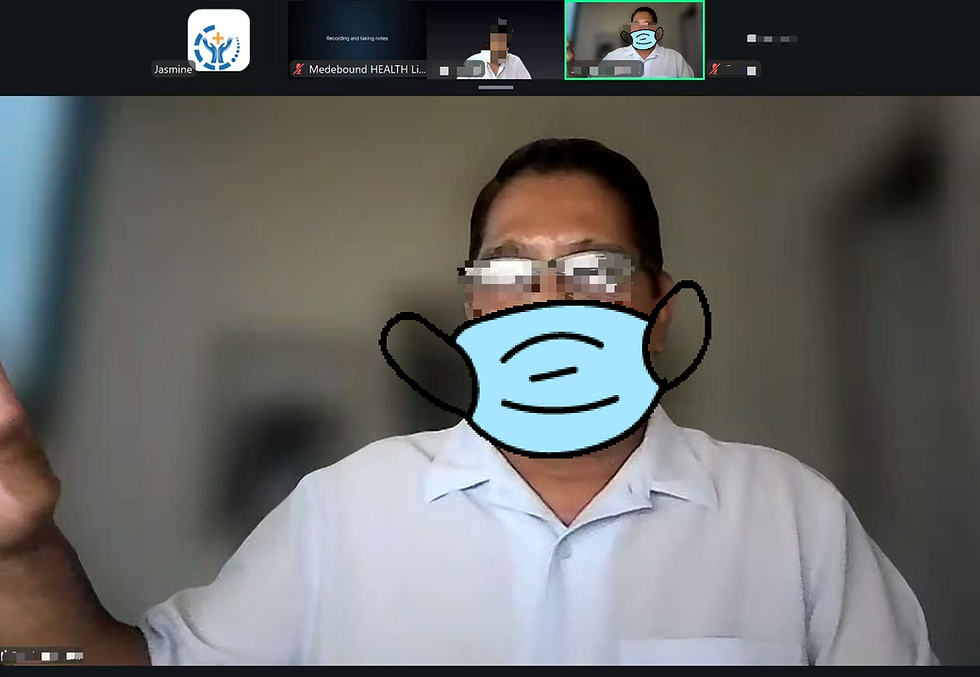
When appropriate, a video discussion may be arranged between the local physician and the U.S. consulting specialist. This allows the doctors to review the case, discuss the reasoning behind recommendations, and consider practical next steps.
Is the second opinion covered by insurance?
Coverage varies. Patients and families should confirm directly with their insurance company whether any part of the coordinated educational review may qualify for reimbursement.
How Medebound HEALTH Supports Complex Neurology Second Opinions
This case is a great example of the structured remote consultation that can be supported by Medebound HEALTH. A patient with a difficult neuroimmunology course, numerous relapses during steroid reduction, and unresolved major decisions.
In circumstances like this, Medebound HEALTH helps the local case physician obtain an independent educational opinion from a U.S.-licensed specialist, so that the next steps can be reviewed more carefully before further treatment changes or procedural decisions.
What this process may involve
Specialist selection
Each case is reviewed and directed to a U.S.-licensed physician whose background fits the clinical problem. For neurologic immune-mediated cases, this may include specialists with experience in autoimmune encephalitis, neuroimmunology, and complex inflammatory disorders of the central nervous system.
Case file preparation
Before the review takes place, the medical record is organized into a structured format. This may include admission notes, treatment history, MRI findings, EEG results, cerebrospinal fluid data, antibody testing, immune workup, and other relevant records. When it’s necessary, documentation can also be translated to support a clearer specialist review.
Structured written opinion
The main deliverable is a written physician-to-physician summary that captures the consulting specialist’s educational perspective. Depending on the case, this may address diagnostic reasoning, relapse analysis, immunosuppressive strategy, taper design, interpretation of prior test results, and practical considerations around the timing of other interventions.
Live clinical discussion when appropriate
A scheduled video discussion can be arranged between the patient’s local physician and the U.S. consulting specialist. This creates an opportunity for direct professional exchange around the record, the disease course, and the reasoning behind the proposed strategy.
Decision support for next steps
When relevant, the review may also help the local team think through broader planning questions, such as outpatient versus inpatient management, long-term remission strategy, treatment sequencing, monitoring priorities, and whether another procedure should wait until neurologic stability becomes more secure.
Important points to understand
This service is intended for international patients and families who want more insight before they make major medical decisions, cross-border care planning, and treatment escalation.
Coverage and reimbursement
Insurance coverage for this type of coordinated educational review varies. Patients and families should confirm directly with their insurance company whether any part of the service may qualify for reimbursement.
Nature of the consultation
The specialist input obtained through this process is educational and consultative. It does not create a physician-patient relationship between the U.S. consulting physician and the patient. It is not the same as in-person care and is limited by the absence of direct examination. The patient’s local physician remains responsible for diagnosis, prescriptions, treatment implementation, monitoring, and all final medical decisions.
Consent and limitations
All patients must complete informed consent documentation that explains the consultative nature of the service, confirms that participation is voluntary, and acknowledges the scope and limits of a remote record-based review.
Why timing matters
In complex cases, a second opinion may be most helpful when obtained before a major transition point. That may include a new immunotherapy plan, a prolonged steroid taper, a change in treatment direction, and a decision about whether surgery should proceed.
Disclaimer
We strive to maintain the accuracy of and regularly update the clinical context information described in this article. However, clinical outcomes may vary between individual patients. The information provided in this article is for general educational purposes only and is not intended as medical advice, diagnostic guidance, or treatment recommendations. It should never replace the careful clinical evaluation and personalized care provided by the patient’s attending physician.
The collaborative consultation service is independently coordinated and operated by Medebound HEALTH. All consultative guidance is provided by independent U.S.-licensed physicians in their individual professional capacity, and this service is not endorsed, provided, partnered with, or officially affiliated with any hospital or cancer center as an institution. This service does not replace clinical care or establish a physician-patient relationship between the U.S. specialist and the patient.