Remote Second Opinion with an MD Anderson-Affiliated Expert for Recurrent Hepatocellular Carcinoma
- Medebound HEALTH

- Jun 3
- 9 min read
Updated: Jun 4
Author: Medical Editor Iris
An MD Anderson-Affiliated Expert for Recurrent Hepatocellular Carcinoma
Complex liver cancer cases can become difficult long before the disease reaches a widely metastatic stage. In fact, the hardest question is not whether cancer is present, but what to do when recurrent hepatocellular carcinoma is still limited to the liver. For this 75-year-old man, the key issue was how to choose the next step after recurrence occurred despite extensive treatment with atezolizumab and bevacizumab.
Medebound HEALTH is a U.S.-based medical coordination service that provides collaborative remote second opinion services for international patients from Asia, the Middle East, and Europe. All consultations are provided by independent U.S.-licensed physicians who have trained or are affiliated with top U.S. academic medical centers.
These consultations are not services of any hospital or cancer center as an institution. For this case, the service offered a review that focused on the choice of local-regional treatment, the limits of repeat systemic immunotherapy, transplant feasibility, and the safest sequence for the next phase of care.
Securing a Hepatocellular Carcinoma Second Opinion from a U.S. Specialist
Patient Overview
Patient: Mr. L. (Alias), 75 years old.
Primary concern: Recurrent hepatocellular carcinoma after prior partial hepatectomy, transcatheter arterial treatment, and prolonged use of atezolizumab and bevacizumab.
Symptoms over the disease course: the patient remained functional, with preserved appetite and energy, but had poor sleep and bilateral knee and plantar pain that raised concern about the need to further evaluate the patient’s bones.
Major treatment history: partial hepatectomy in May 2023 for grade II hepatocellular carcinoma, transcatheter hepatic artery embolization plus arterial chemoembolization in June 2024 with unsatisfactory effect, then repeated cycles of atezolizumab plus bevacizumab from August 2024 through February 2026.
Important history points: cirrhosis in the residual liver, chronic hepatitis B on entecavir, diabetes, hypertension, previous cerebral infarction, immune-related cardiac and hepatic toxicity during treatment, splenic infarction on later imaging, and proteinuria.
Consultation goal: whether local-regional therapy is still appropriate for two recurrent lesions, the feasibility of surgery, what treatment should come after atezolizumab and bevacizumab, whether a transplant makes sense, and when clinical trials should enter the discussion.
Understanding hepatocellular carcinoma
Hepatocellular carcinoma is not judged by tumor size alone. The treatment choice depends on three major factors at the same time: tumor burden, liver function, and performance status.
This is why two patients with small and recurrent tumors may still need very different plans. A patient with good functional status who has cirrhosis or worsening liver reserve may not be an ideal surgical candidate even when the disease still appears restricted to the liver.
The National Cancer Institute guidance lists surgical resection, liver transplant, ablation, and radiation therapy among accepted treatment options for localized or liver-limited recurrent HCC in some patients. The same source notes that surgery usually fits best when there is a solitary mass, good performance status, minimal liver dysfunction, no portal hypertension, and no more than Child-Pugh A cirrhosis. For recurrent disease without the involvement of blood vessels, there are numerous treatment options, including transplant, resection, ablation, and radiation therapy.
This is also why a transplant may still enter the discussion even after recurrence. Liver transplantation can be the treatment of choice for early-stage HCC in some patients with significant portal hypertension or poor hepatic reserve.
By the time the second opinion was requested, this was no longer a simple case of “small recurrent nodules.” The patient had already undergone a partial hepatectomy in 2023. He later developed recurrent lesions in the liver. A transcatheter arterial approach in June 2024 did not achieve a satisfactory result. After that, he received a long course of atezolizumab and bevacizumab. Imaging showed periods of partial control, but by February 19, 2026, both recurrent nodules had enlarged again.
In mid-February 2025, treatment had to pause after elevated blood pressure, mild hepatic insufficiency, elevated high-sensitivity troponin T, and ECG changes raised concern for an immune checkpoint inhibitor-related adverse reaction. Later records also described cirrhosis, enlarged spleen, chronic hepatitis B, diabetes, and the presence of proteins in the urine.
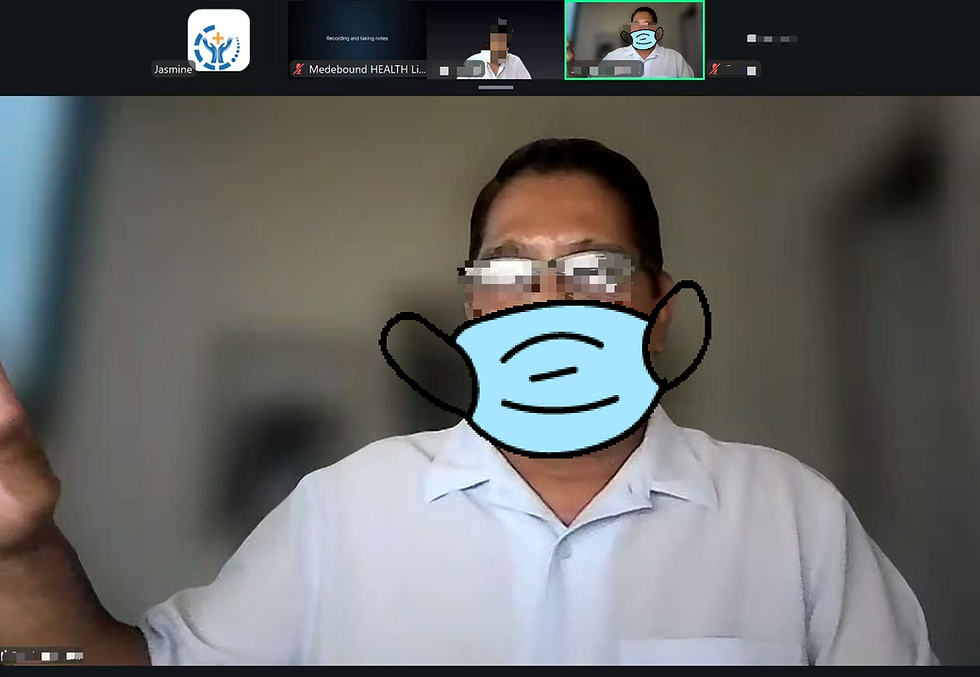
This is one reason the consultation became very important. The question became how to provide care without harming the remaining liver, the kidneys, and the patient’s future eligibility for other therapies. Medebound HEALTH made this possible by organizing a virtual meeting with an MD Anderson-Affiliated Expert to explore the patient’s history, current situation, and future treatments.

Educational Insights During the Consultation
This case was reviewed through Medebound HEALTH’s remote second opinion services by a Professor in the Department of Gastrointestinal Medical Oncology.
The specialist’s advice was not to push for another immediate round of the same immunotherapy. Instead, atezolizumab and bevacizumab should not be resumed. Moreover, surgery was viewed as potentially risky because liver function had become a limiting factor. Therefore, local-regional therapy became the main therapy for this case.
The first lesion in the liver was considered a reasonable target with radiation therapy or Y-90 radioembolization. The second lesion was a better fit for radiofrequency ablation.
The consultation also added several practical next steps. Genetic testing was recommended. After local therapy, the patient was advised to rest for about two months and then undergo repeat imaging to reassess tumor status. Because the patient had knee and plantar pain, another bone scan was advised if pain persisted and concern for skeletal spread remained. Lenvatinib was recommended as a later option after a two-month interval if renal function remained preserved.
The Value of a Second Opinion for Hepatocellular Carcinoma
The consultation discussed the treatment of hepatocellular carcinoma based on cancer burden, hepatic reserve, toxicity, and whether the patient may still qualify for a transplant-oriented strategy.
The second opinion also clarified several major boundaries. It made clear that:
Atezolizumab and bevacizumab had reached their limit in this case.
Surgery was not the easy answer because the liver itself had become part of the risk.
Local therapy deserved priority before immediate movement to clinical trials.
It also gave the patient other options by exploring genetic testing, kidney function, hepatitis B monitoring, and transplant consultation.
Why a Remote Expert Second Opinion Is Important Before Major Decisions
International travel is not always the best next step, especially for cases of recurrent liver cancer. In reality, the following questions are commonly asked in HCC:
Should the current systemic protocol stop completely?
Does surgery still make sense, or does liver reserve make that risk unacceptable?
Which local therapy best fits each lesion?
Should transplant evaluation begin now or only after local control?
Is it wiser to use available standard options before a clinical trial?
This is where an independent academic second opinion can serve a practical role. Medebound HEALTH provides the opportunity to obtain a second opinion from a highly experienced U.S. specialist in complex cancer care. The patient receives a review of the case, a clearer treatment plan for local physician review, and a better-defined sense of which decisions are urgent and which can wait until post-treatment reassessment.
The goal here is not to compete with local care. The goal is to support better decisions before another irreversible step takes place.


How Medebound HEALTH Connects International Patients to Top U.S. Cancer Experts
Medebound HEALTH is a U.S.-based medical coordination service that facilitates second opinions from independent U.S.-licensed physicians affiliated with leading cancer centers such as MD Anderson, Mayo Clinic, Memorial Sloan Kettering and Johns Hopkins. Since 2016, the service has supported 3000+ international patients, primarily from Asia, seeking expert input before major oncology decisions.
Rated 4.6 ⭐⭐⭐⭐⭐ at Trustpilot
Medebound HEALTH's online testimonials. Learn More

How Medebound HEALTH Handles Complex Liver Cancer Second Opinions
This case is a strong example of the type of structured remote consultation that can be supported by Medebound HEALTH. A patient with recurrent hepatocellular carcinoma, cirrhosis, a previous history of surgery and locoregional therapy, long exposure to systemic immunotherapy, possible toxicity to previous treatments, and unresolved questions about transplant, radiation, ablation, and systemic therapy.
In cases like this, Medebound HEALTH helps the local case physician obtain an independent educational opinion from a U.S.-licensed specialist so that the next steps can be reviewed with more precision before further treatment changes.
How Does This Process Look?
Specialist selection
Each case is reviewed and directed to a U.S.-licensed physician whose background fits the clinical problem. For hepatobiliary cancer cases, this may include specialists with expertise in hepatocellular carcinoma, liver-directed therapy, transplant-related treatment planning, and advanced GI oncology.
Case file preparation
Before the review takes place, the medical records are organized into a structured format. This may include operative reports, pathology, liver imaging, treatment history, adverse-event history, lab trends, hepatitis status, and other records that affect treatment choice. The documentation can also be translated to support a clearer specialist review.
Structured written opinion
The main deliverable is a written physician-to-physician summary that captures the consulting specialist’s educational perspective. Depending on the case, this may address resection candidacy, local-regional treatment choice, systemic therapy sequence, transplant feasibility, the risk of side effects, and monitoring priorities after the next intervention.
Live clinical discussion
A scheduled video discussion can be arranged between the patient’s local physician and the U.S. consulting specialist. This creates an opportunity for direct professional exchange around the imaging, treatment response, and the reasoning behind the proposed approach.
Decision support for next steps
The review may also help the local team think through planning questions, such as local therapy first versus immediate drug change, the role of genetic testing, how to preserve renal and hepatic function for later treatment, and whether transplant review or clinical trials should move earlier in the plan.
Important points to understand
This service is intended for international patients and families who want more insight before they make major medical decisions, cross-border care planning, and treatment escalation.
Insurance coverage for this type of coordinated educational review varies. Patients and families should confirm directly with their insurance company whether any part of the service may qualify for reimbursement.
The specialist input obtained through this process is educational and consultative. It does not create a physician-patient relationship between the U.S. consulting physician and the patient. It is not the same as in-person care and is limited by the absence of direct examination. The patient’s local physician remains responsible for diagnosis, prescriptions, treatment implementation, monitoring, and all final medical decisions.
All patients must complete informed consent documentation that explains the consultative nature of the service, confirms that participation is voluntary, and acknowledges the scope and limits of a remote record-based review.
In complex liver cancer cases, a second opinion may be most useful before a major transition point. That may include progression after first-line systemic therapy, a decision between surgery and local-regional treatment, transplant eligibility review, a planned shift to a new systemic regimen, or the question of whether a clinical trial should begin now or later.
FAQ: Recurrent Hepatocellular Carcinoma Second Opinion
1. Why was a second opinion important in this recurrent hepatocellular carcinoma case?
A second opinion was important because the patient’s cancer had recurred after surgery, transcatheter arterial treatment, and prolonged atezolizumab plus bevacizumab therapy. The case was not only about controlling liver tumors, but also about protecting remaining liver function, kidney function, and future treatment eligibility. A U.S. specialist review helped clarify whether local-regional therapy, surgery, transplant evaluation, systemic therapy, or clinical trials should be prioritized next.
2. Why was atezolizumab and bevacizumab not recommended to continue?
The specialist felt that atezolizumab and bevacizumab had reached their practical limit in this case. The patient had already received multiple cycles, and the recurrent liver lesions had enlarged again despite treatment. There were also concerns about prior immune-related toxicity, blood pressure issues, liver function changes, proteinuria, and other risks that made continuing the same regimen less appropriate.
3. How can Medebound HEALTH help in a recurrent hepatocellular carcinoma case?
Medebound HEALTH helps international patients organize a remote second opinion with an experienced U.S.-licensed specialist. In complex liver cancer cases, the service can help review prior surgery, imaging, pathology, liver function, systemic treatment history, and current recurrence status. The goal is to provide an independent educational opinion that the patient and local physician can use when discussing the next treatment step.
4. What does Medebound HEALTH review before arranging the consultation?
Medebound HEALTH helps organize the patient’s medical file before the specialist review. This may include operative reports, pathology reports, CT or MRI imaging, treatment history, lab trends, hepatitis B status, liver function records, adverse-event history, medication lists, and prior oncology notes. A well-prepared file helps the consulting specialist understand the full case clearly.
5. Can Medebound HEALTH arrange a written report?
Yes. A structured written second opinion can be arranged after the patient’s records are reviewed. The report may summarize the consulting physician’s view on the diagnosis, previous treatment response, current treatment options, risks, sequencing, and recommended next discussion points for the local medical team.
What should patients understand before using the service?
Patients should understand that Medebound HEALTH provides coordinated access to independent medical opinions. The service does not guarantee a cure, treatment acceptance, transplant approval, clinical trial enrollment, or a specific outcome. The final treatment plan must always be reviewed and carried out by the patient’s local treating doctors.
Disclaimer
We strive to maintain the accuracy of and regularly update the clinical context information described in this article. However, clinical outcomes may vary between individual patients. The information provided in this article is for general educational purposes only and is not intended as medical advice, diagnostic guidance, or treatment recommendations. It should never replace the careful clinical evaluation and personalized care provided by the patient’s attending physician.
The collaborative consultation service is independently coordinated and operated by Medebound HEALTH. All consultative guidance is provided by independent U.S.-licensed physicians in their individual professional capacity, and this service is not endorsed, provided, partnered with, or officially affiliated with any hospital or cancer center as an institution. This service does not replace clinical care or establish a physician-patient relationship between the U.S. specialist and the patient.